|
| Renshi Simon Keegan |
The following article was submitted by Renshi Simon Keegan. He has published many articles on the martial arts and I consider him a very dedicated martial artist and a friend. Enjoy!
When I began Karate, I viewed kata simply as a performance art within the martial art. I saw no practical function to it other than to attain gymnastic ability. Now however I view kata as a vital and practical core of the martial arts.
But in explaining the importance of Karate Kata I would first like to correct a few misconceptions concerning traditional Karate - many of which were misconceptions that I held.
Most people who claim to do "traditional Karate" are actually studying an art that only dates back to about 1924.
It would be rather like a boxer claiming to study "traditional prize fighting" or an Olympic fencer claiming to study classical swordsmanship.
If you study Shotokan, Wado Ryu or Taekwondo, you are not studying a "battlefield" art or an art older than 100 years old. You are studying an art created in Japan (or Korea in the case of Taekwondo) that was loosely based on Okinawan Karate.
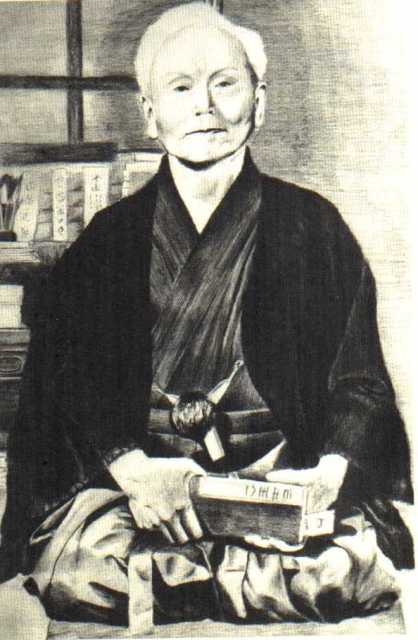
When Gichin Funakoshi began to formalise what became known as Shotokan he discarded many of the conventions of Okinawan Karate and adopted certain Japanese ways.
He adopted the Judogi, the Dan-I grading system and formalised kata, kihon and kumite according to the requirements of modern Budo.
Kumite adopted the Ippon principle seen in Judo and Kendo of "one hit one kill."
Kihon consisted of taking moves out of kata and practicing them in their most basic application - as a block, kick or strike.
Kata were largely practised as a form of calisthetics - to gain perfection of form, speed, endurance, posture and timing.
Kumite became a kind of protype kickboxing and kata became a performance art.
When a Karateka wanted to practice self defence without being bound by the rules of kumite, they would practice a kind of kumite called "ippon kumite" whereby you would defend against an attack with a fairly finite finishing move such as a throw and strike.
When Karate was marketed internationally it was sold as the elite percussive (striking) fighting art. Unlike boxing, kicks were allowed. In kata, one could show other techniques like elbows and knees and in kihon one could break bits of wood with a single chop.
For many you were either a kumite fighter or a kata performer. If you didn't have the speed and aggression to fight, you could always concentrate on your kata and win trophies for that instead.
When I was a child my dad first shared some techniques with me that he had learnt from his boyhood Jujutsu (and later Karate) it was simply what amounted to "dirty fighting" - no kata, no stylised moves. He taught me to punch and throw a sneaky elbow in with the same arm - a good elbow strike will slice open somebody's eyebrow. He also taught me a very important principle that I have never bettered in 20 odd years since - always hit them first, and give them a good kicking when they're down. "Never kick a man when he's down" did not apply in 1950s Liverpool when my dad was first taught.
There was a very good Karatedo school near to where I lived. I had friends who trained there, but I did not fancy it because I perceived the emphasis on kata to be weak and unrealistic.
When I joined a formal Karate club as a teenager, I was attracted by my sensei's emphasis on fighting.
We did lots of sparring, both semi-contact and full contact. We also grappled on the ground and did lots of self defence. Although there were other aspects to the training myself and my peers prided ourselves on being able to "handle" ourselves.
My friend was training in a traditional Goju Ryu club and all he ever seemed to do was kata, and predictably when we sparred with him he didn't have the skills we had.
Kata seemed to be a necessary evil to us. We fought all lesson and then for the last 15 minutes, did some kata. Maybe it was a Japanese thing, take the rough with the smooth. I certainly never found much value in it.
Remember that in the early 1990s nobody I knew had the internet so if you wanted to read up on kata you had to buy a book, and my local town wasn't exactly cosmopolitan when it came to specialist cultural arts!
Granted, some of the kata - particularly Bassai Dai - looked dynamic when the black belts did them, but our kata like the first three Taikyoku forms seemed like an exercise in being obsessed with Gedan Barai - a move we never did in sparring.
In about 1996 I found an old book on Ed Parker's Kenpo Karate. The book was from the 1960s I would guess and emphasised Karate's Chinese - rather than Japanese - origins. It showed Chinese weaponry but also showed a two man drill featuring many of the moves I knew from kata but done in close quarters.
It inspired me to look beyond Japanese Karate's 1920s birth and look at how the Okinawans and Chinese practiced their forms.
Then I asked Sensei about the meaning of the moves in kata and very mysteriously he said: "A block is a strike and a block is a throw."
It started to fit together. Maybe I needed to forget about the long range techniques that we used in Karate sparring and concentrate on the self defence moves I had learnt. Sensei had taught us lots of Judo throws, Aikido locks and so on. Maybe it was these moves that were within the kata.
I was also studying the Yang Style Long form in Tai Chi and once again I saw techniques that were open to interpretation. Some of them were fairly obviously punches - but what about "Fair Lady Works Shuttles", "Needle at Sea Bottom" and "Carry Tiger to Mountain" - it was almost as if the person designing the forms wanted us to choose our own applications.
Around 2001, I met an instructor who introduced me to what he called TNT - the TNT stood for "techniques not taught" namely the nasty breaking, ripping and pressure point techniques found within kata. He also re-aquainted me with the idea of two-man flow drills.
So I came to realise that Kata was not just a dance or a pointless tradition - or a classical mess as Bruce Lee called it.
As I trained and graded in Shotokan, Jujutsu, Tai Chi and Goju Ryu I realised kata was a database of techniques. Every throw I could find in Judo, I found in a Karate kata. Every lock, throw, twist and crank in Aikido is in a Karate kata.
My real syllabus was not the A4 booklet in my kitbag my real syllabus was kata.
I began to catalogue every single technique in every single kata I knew and came up with a variation of realistic bunkai based on real "street" attacks.
As a previous blog summed up, Kata is a mneumonic (memory aid) to act as a database of techniques already learnt.
In other words, the old practitioners learnt a technique (say a wrist lock) and then when they learnt the kata, they recognised the movement and were able to understand the kata based on a lesson already imparted.
For people who would say "kata is useless in a fight" I would say "skipping is useless in a boxing match - so why do boxers do it?"
In "traditional" (post 1920) Karate, you have over a dozen forms (kata) per style - Shotokan has upwards of 25 kata and Goju Ryu has about 14.
But in old Toshu Jutsu (Karate Jutsu) as in the styles of Quan Fa that preceded it, each style only had one form. Remember Gichin Funakoshi saying that for nine years he only learnt Naihanchi (Tekki) - Choki Motobu seemed to favour the same form and rarely practiced any other.
In Tai Chi (Taiji Quan) there was the Yang family. And each member of the Yang family practiced the same form. Yang Lu Chan practiced his form one way, and Yang Ban Hou practiced it another. Nowadays we call this form the "108 step" but back then it didn't need a name. It was just the Yang family "Quan" - it was their style, their form, their syllabus and their way of keeping healthy.
Similarly in Fujian, you may have learned Tiger Quan, Crane Quan, Lion Quan etc and the idea of style and form were one and the same.
Eventually Fujian (particularly the vaunted Kojo Dojo) came to be a melting pot and drop-in centre for martial artists and practitioners of different STYLES learned each others' forms.
Think of it like this, in Tai Chi, a Yang master could have learned a Wu style form. But he would not be a master of Wu style, just a practitioner of one aspect of the style - namely the form.
Karate masters like Funakoshi and Mabuni took a hotchpotch of forms from different styles and attempted to make them into one style, respectively Shoto Ryu and Shito Ryu. But the idea of one style having 27 forms is a pretty modern one.
This is why I treat each kata group as a separate style.
That means learning each form and its capabilities to the nth degree.
So when we learn the Pinan kata (Heian 1-5) we first learn the form, then examine the bunkai, the oyo and the variations. Can we find throws within it? Can we find locks, what about vital points strikes. Will the technique work on the ground? Can we apply the defence in the heat of the moment? Does it usual natural responses and body mechanics?
Does the kata have the potential to be performed with a weapon? In my school we practice Heian Shodan with Sai, Heian Nidan and Sandan with Nunchaku, Heian Yondan with Tonfa and Dip Dao and Heian Godan with Rokushaku Bo.
Remember Karate began as the original "No-Holds-Barred" mixed martial art.
The art began to take shape in the 16th and 17th century when old Okinawan wrestling (Tegumi) was combined with old Siamese boxing (Muay Boran) a combination known in Okinawa as Ti'gwa.
In the 1700s, Chinese Kung Fu began to greatly influence the fighting methods and it became known as Toshu Jutsu (or Toshukuken or Tode Jutsu) meaning "Chinese hand skills."
The great pioneer in the 1800s was Sokon Matsumura. He combined his Okinawan training with Chinese Shaolin Kung Fu, Japanese Bujutsu (he was a master of Jigen Ryu and trained in Satsuma) and also trained under a Vietnamese master.
Matsumura soaked up every martial art he could and refined it into his Shuri Te system.
With an eclectic mix of Okinawan, Japanese, Chinese, Thai and Vietnamese boxing, in the 1800s Toshu Jutsu was also exposed to the west - from Danish sailors on board trawlers to Commodore Perry's marines.
By the late 1800s, Matsumura's art was a truly effective "mixed martial art."
When each style (Quan) and kata (Quan) were as one, the Jutsu (science) was in the passing on of three areas - the ability to defend in a violent situation, the ability to develop efficient technique and the ability to impart these skills through drills and practice.
I teach according to these three sciences. The Science of Violence (SOT), the Science of Technique (SOT) and the Science of Learning (SOL).
We will first examine the elements of the SOV.
SOV1. Attacking range
There are only a finite number of distances from which an assailant can launch an attack. The opponent may be at “long range”, so far away from us that the only way he could hit us is with a projectile or firearm attack or medium long range where maybe they could attack us with a hand-held weapon. The next distance is “kicking range” where the only way he could reach us is with a kicking attack. So we know that if the opponent is five foot away we don’t have to worry about throws! Then we have “punching range”, typically the type of distance between two boxers. Here the opponent can reach us with a kick or a punch. The next range is “close range”. We are too close for the opponent to kick but he can still punch with hooks, he can also use knees and elbows and can clinch. This is the range favoured in MMA when one man has the other pinned up against the cage and “dirty boxing” commences.
The next range is the full clinch. We don’t really need to worry about kicks or punches as much as but the main threats are throws and trips. Finally we have the groundwork range, with both opponents grappling or pounding on the floor. So there we have it: just seven fighting ranges. The real skill is twofold, firstly we must learn to defend against appropriate attacks at appropriate ranges. The second skill is mixing and matching the fighting ranges. For example you are on the floor and the opponent is stood.
SOV2. Habitual Attacks
To explain the nature of habitual attacks I can do no better than to refer to the pioneering research of Hanshi Patrick McCarthy. The principle of the Habitual Acts of Physical Violence (HAPVs) is that violent attacks are not random they are habitual. McCarthy Sensei cites 36 main attacks. These include punches, kicks, grabs, trips, locks, distractions and posturing.
They key to understanding the Science of Violence is combining knowledge of habitual attacks with the appropriate attacking range and ensuring no range is neglected.
SOT1. Understanding the syllabus
Many martial arts schools use a syllabus as a means only to assist in grading revision or as a curriculum outline. A truly successful syllabus should of course include all the elements necessary for a student to pass a grading but it should also ensure that the student is learning the skills at the appropriate stage of their development. At academic school we are taught the ABCs, then we are taught how to form words, then sentences, the joined-up writing, then prose and poetry and so on. A martial arts syllabus should not teach the poetry of the art before the ABCs. A good martial arts system should emphasise both quantity and quality. By quantity I do not mean learning a thousand kata. By quantity I mean a full complement of techniques. Strikes, locks, throws, hold-downs, reversals, escapes and perhaps some weapons training. But quality should also be paramount. Not just to make the student look “pretty” enough to pass a grading or tough enough to score an Ippon, but in order that their techniques are performed with efficacy.
SOT2. Understanding Defence
Just as there are only four fighting ranges and a habitual set of attacks there are also a finite number of ways we can defend against a technique. In fact there are four* We can
1) Block the attack. To obstruct it before it becomes effective
2) Parry the attack, redirect it or blend with it
3) Avoid the attack, duck, weave, or run away
4) We cause pain to the attacker which makes him voluntarily (or involuntarily!) cease the attack. Once we understand there are a finite number of ranges, each of which only cater to a finite number of attacks and each of these can only be defended in a finite number of ways, we start to realise that martial arts are a very precise science.
*The four defences: I must give credit to Hanshi Terry Wingrove for teaching me this principle.
SOT3. Understanding Technique
Did you ever show a technique from your style to an advanced martial artist from another style who, despite never having seen that particular technique before still managed to do the technique better than you? This is because after reaching a certain level of skill, how the technique seems to manifest itself is unimportant. What matters are principles common to all techniques in all arts, from archery to Sumo.
The Five Major Principles of Martial Arts
1) Relax. There is no technique that is better as a result of being tense, locked-up and rigid
2) Breathe. Breathing is emphasised in arts like archery, Tai Chi and Iaido. But is also important in more external arts. Learn to breath fully, naturally and move in time with your breath
3) Use the waist and/or hips. All movement must originate from the midsection. A baseball hitter would not dream of moving the bat using only his arms.
4) Two directions. This is the most abstract of the concepts. Every technique make use of two directions or more. When we punch we not only move one hand forward, we move the other back. When we block we do so diagonally. When we apply a wrist lock the wrist is moved backwards and to the side. When we cut with a sword we come down in a chopping action but also arc inwards in a cutting action.
5) Train slowly. Learn to practice each technique at Tai Chi speed to ensure perfect attention to detail. Also, as the defender you can afford to move slower than the attacker. If he is punching you in the face his fist has to travel two feet in distance, whereas your face only has to move a few inches to avoid it. So why try to move at the same speed as the attacker.
*The five principles: I must give credit to Renshi Reiner Parsons for teaching me this lesson.
Other common principles in martial arts
1) When you are studying for self defence, remember there are no rules (and not like in MMA where there are no rules apart from about 30 exceptions!). There are few techniques that are not improved by first distracting the opponent. Spit in his eyes, flick him in the groin, throw your coffee in his face, rake your car keys across his eyes, throw a handful of coins in his face. You only need to buy yourself a fraction of a second.
2) Kiai. Whether you view a Kiai as a war-cry, a harmony of energy or a way of expelling all the air from your stomach, this under-rated technique will pay off
3) Keep good stature. This means keeping the elbows and shoulders down, the spine straight and the hips relaxed.
4) Keep techniques finite. A reverse hook kick to the shoulder blade may score a point in the Dojo but can you rely on it to end a confrontation? If you can’t use a technique that guarantees the opponent is knocked out, use a technique that at least puts him on his backside.
All of these principles are contained within Kata.
SOL1. Making it work for you
Once we begin to understand the Science of Violence and the Science of Technique we need to learn how exactly we can learn these techniques so well and so thoroughly that they become instinctive. It is great to be able to perform a technique well in the Dojo (and even better to perform it well in a competition or grading) but what is the use if you cannot perform it when it really matters, on the street?
And so we practice the individual techniques (Kihon) applying the principles of technique to them. Then we work with a partner (Kumite) and he attacks us (the Science of Violence) and depending on his range and his attack, we use a technique to defend against it, then we get in our retaliation.
This is our ABC: Avoid, Block, Counter.
Now we need to practice the technique by drilling it. We can use shadowboxing, Kata, flowdrills or simple repetition. We practice, practice, practice and then practice some more. Eventually it doesn’t matter from which angle the attack comes because our defence is so well drilled it seems to spring from nowhere.
But now we have learn the technique and drilled it, we need to somehow simulate the state of mind and environment we might find outside. The opponent is angry, fast, coming at us powerfully and violently. Can we still pull the trick out of the bag? For this we use sparring. Kickboxing style, Judo style and MMA style.
SOL2. Managing your mindset
When your first practice a technique your state of mind is Kime, full focus and concentration on the task in hand. Learning the technique, examining it and getting it right.
The next state of mind is Zanshin. Awareness of surroundings, awareness of the opponent’s actions.
The final state of mind is Mushin (no mind). The ability to perform the technique without thinking about the opponent’s attack or your defences.
SOL3. Have faith in your system
I believe that the men who created the Kata that we practice knew what they were doing. I believe they understood violence, technique and learning and so encrypted all the necessary techniques into our Kata. There are lovely Aikido-style moves in Heian Shodan, wonderful grappling techniques in Heian Sandan and so great throws in Bassai Dai. And if ever you get attacked in a confined space, you’ll truly value Tekki Shodan….
Practice the techniques and then try to find them in the Kata you already know. Karate kata are a wealth of self defence techniques.
Instead of saying "Karate is limited because it has no throws, so I'm studying Judo as well," why not find the throws in Karate?
Kata is an important aspect of Toshu Jutsu, but not when taught as a dance. Kata must be taught as a living, breathing fighting system.
Simon Keegan, 4th Dan Renshi
Hakuda Kempo Toshu Jutsu
Chief Instructor: Bushinkai Academy of Martial Arts
Director: United Kingdom Budo Federation
Chairman: The Empire Martial Arts Association
Web: www.bushinkai.org.uk